
Kidney Stone Symptoms
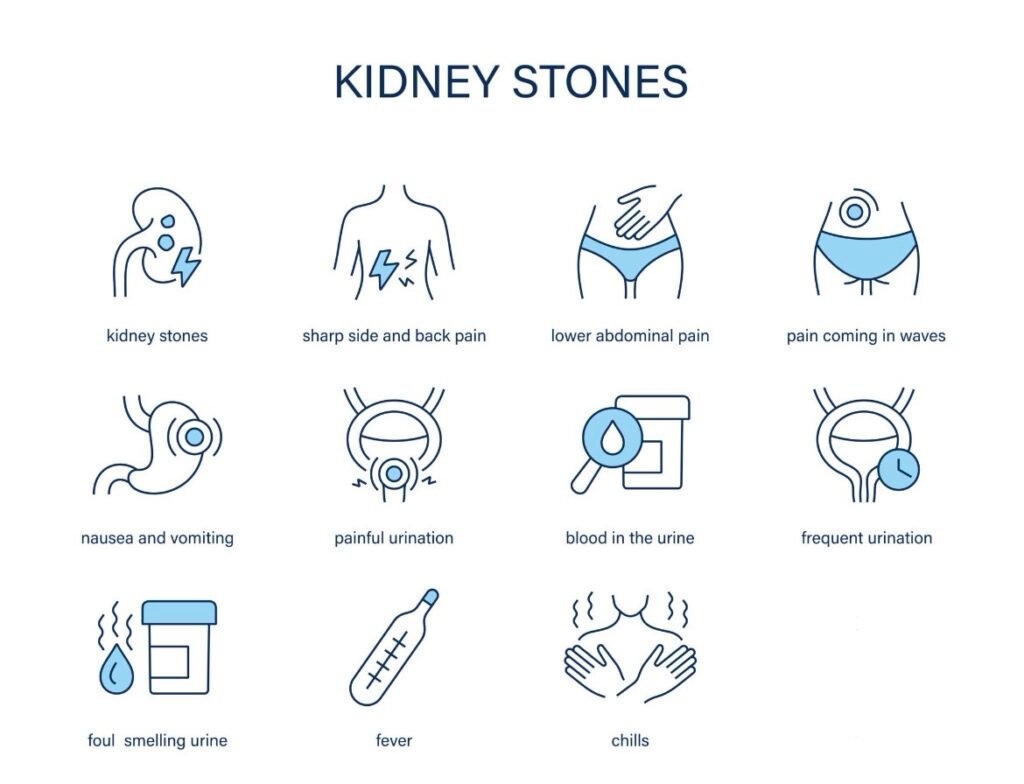
Understanding Kidney Stone Symptoms
Kidney stones are hard mineral deposits that form inside the kidneys and can cause severe pain and urinary symptoms. Many patients first experience symptoms suddenly and intensely.
Kidney stone pain is often described as one of the most severe types of pain, but early diagnosis and treatment can prevent complications.
Recognizing kidney stone symptoms early helps ensure timely and effective treatment.
What Are Kidney Stones?
Kidney stones develop when minerals in the urine crystallize and form solid deposits inside the kidney. These stones may:
Remain in the kidney
Move into the ureter (tube connecting kidney to bladder)
Block urine flow
Symptoms usually begin when a stone moves or causes obstruction.
Common Symptoms of Kidney Stones
Kidney stone symptoms vary depending on the size and location of the stone.
Severe Flank Pain (Side Pain)
Blood in Urine (Hematuria)
Urine may appear red, pink, or brown
Blood may be visible or detected on urine testing
Even small stones can cause bleeding.
Nausea and Vomiting
Severe stone pain often triggers:
Nausea
Vomiting
Sweating
If the stone reaches lower urinary tract, it may cause:
Burning sensation
Irritation
Urgency
Fever and Chills (Emergency Sign)
If kidney stone is associated with infection:
Fever
Chills
Weakness
This is a medical emergency and requires immediate attention.
Kidney Stone Symptoms in Men
In men, pain may radiate:
From back to groin
To testicles
Men may also experience blood in urine and urinary discomfort.
Men may also notice weak urine stream, straining, or night-time urination. Ignoring symptoms can gradually worsen bladder and kidney function.
Kidney Stone Symptoms in Women
In women, pain may radiate:
To lower abdomen
To pelvic region
Symptoms can sometimes mimic urinary infection or gynecological pain, requiring proper evaluation.
Recurrent symptoms should not be treated repeatedly with home remedies or antibiotics without proper evaluation.
When should you consult a Urologist?
You should seek urology consultation if:
You experience severe side or back pain
Pain comes in waves and is worsening
There is blood in urine
You have nausea or vomiting
You develop fever with urinary symptoms
Pain does not improve
Early evaluation prevents kidney damage and infection complications.
How Are Kidney Stones Diagnosed?
Evaluation may include:
Detailed medical history
Urine examination
Blood tests
Ultrasound of kidneys, bladder
CT scan (most accurate test)
Imaging helps determine stone size, location, and blockage.
Treatment depends on the size and location of the stone:
Most modern treatments are safe and minimally invasive.
Can Kidney Stones Be Prevented?
Yes, in many cases. Preventive measures include:
Lifestyle modification significantly reduces recurrence.
Related Urinary Symptoms
Frequent urination may also be associated with:
Each symptom requires proper evaluation to identify the exact cause.
KIDNEY STONE SYMPTOMS – FAQs
What is the most common symptom of a kidney stone?
The most common symptom is sudden severe pain in the side or back (flank pain). The pain may radiate to the lower abdomen or groin and often comes in waves.
Can kidney stones cause blood in urine?
Yes. Kidney stones frequently cause blood in urine (hematuria), which may be visible or detected only on urine testing.
Do kidney stones always cause severe pain?
Not always. Small stones may cause mild discomfort or no symptoms. Severe pain usually occurs when the stone moves into the ureter and blocks urine flow.
Can kidney stones cause burning during urination?
Yes. When a stone moves toward the bladder, it can cause burning during urination, urgency, and frequent urination.
Is fever with kidney stone dangerous?
Yes. Fever along with kidney stone symptoms may indicate infection with obstruction, which is a medical emergency and requires immediate treatment.
How long do kidney stone symptoms last?
Symptoms may last until the stone passes or is treated. Pain can come in waves and may persist for hours or days depending on the stone’s size and location.
When should I urgently see a urologist for kidney stone symptoms?
Yes. Most cases are treated successfully with medications, lifestyle modification, bladder training, or treatment of the underlying condition. Surgery is required only in selected cases.
How are kidney stones diagnosed?
Diagnosis may include urine tests, blood tests, ultrasound, or CT scan. A CT scan is often the most accurate method to detect stone size and location.
Can kidney stones pass without surgery?
Yes. Small stones often pass naturally with medications, hydration, and pain control. Larger stones may require minimally invasive procedures.
Can kidney stones come back?
Yes. Patients who have had one kidney stone are at higher risk of recurrence. Adequate hydration and dietary changes can significantly reduce the risk.
Why Choose Dr. Vikas Gupta
Expert-led, ethical and advanced urology care in Gurugram & Delhi NCR
Urologist | Andrologist | Uro-Oncologist
Trusted Expertise
MCh Urology from PGIMER Chandigarh with advanced training in endourology and uro-oncology.
Advanced Laser Surgery
Minimally invasive laser procedures for stones, prostate and urinary disorders.
Fortis Hospital Care
Associate Consultant at Fortis Memorial Research Institute, Gurugram.
Patient-Centric Approach
Compassionate consultation, transparent advice and ethical treatment.
Book Appointment with Dr. Vikas Gupta
If you are experiencing severe side pain, blood in urine, or suspected kidney stone symptoms, early urology consultation ensures accurate diagnosis and effective treatment.
Prompt treatment prevents complications and relieves pain faster.
Providing trusted urology care in Gurugram & Delhi NCR