
Bladder Disorders Treatment
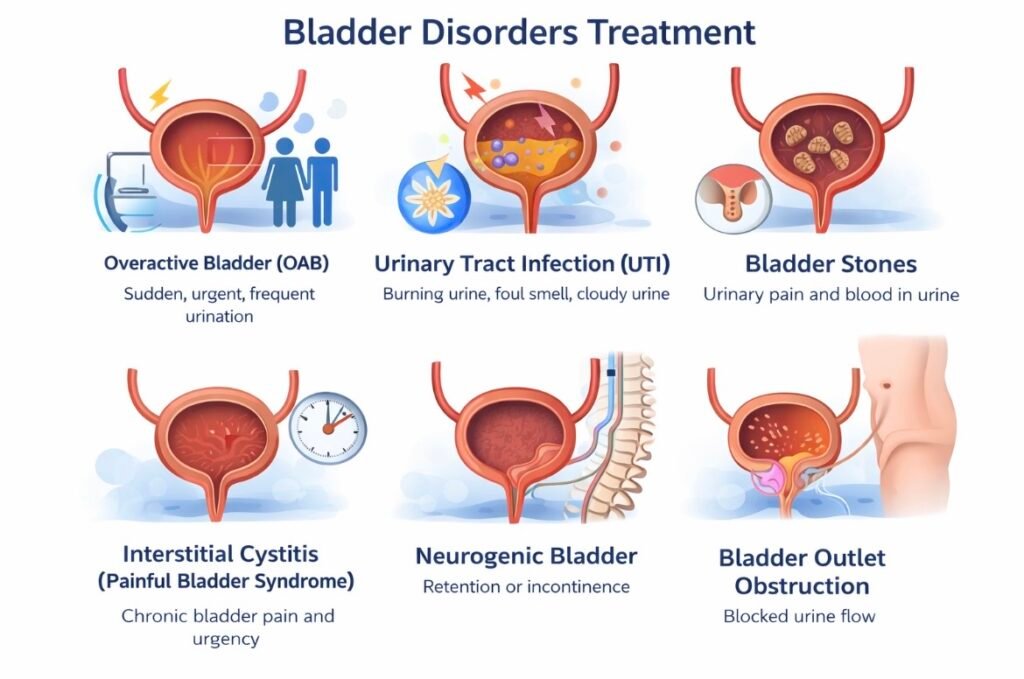
Comprehensive diagnosis and personalized bladder disorders treatment including medical management, minimally invasive procedures, and long-term bladder health care.
What Are Bladder Disorders?
Bladder disorders are conditions that affect how the urinary bladder stores and passes urine. The bladder normally stores urine and releases it in a controlled way. When its muscles, lining, nerves, or outlet are affected, problems with urination can develop.
Bladder disorders may cause frequent urination, urgency, pain, difficulty passing urine, leakage of urine, or incomplete bladder emptying. These conditions can affect both men and women and may significantly impact quality of life if not treated properly.
Types of Bladder Disorders
Overactive Bladder
Sudden urge to urinate with increased frequency and sometimes urine leakage
Neurogenic Bladder
Bladder dysfunction due to nerve damage
Urinary Tract Infection (Cystitis)
Infection of the bladder causing burning, urgency and pain
Urinary Incontinence
Loss of bladder control (Urine leakage)
Bladder Stones
Stones formed due to incomplete emptying of bladder
Bladder Outlet Obstruction
Blockage to urine flow due to prostate enlargement or urethral stricture
Interstitial Cystitis
Chronic painful bladder condition without infection
Bladder Tumors
Abnormal growths inside the bladder
Causes of Bladder Disorders
Urinary tract infections
Prostate enlargement in men
Weak pelvic floor muscles
Nerve damage from diabetes, stroke, spinal injury
Aging-related bladder changes
Kidney or bladder stones
Previous pelvic or urinary surgery
Chronic bladder inflammation
Certain medications
Excess caffeine, alcohol, and smoking
Poor fluid intake habits
Symptoms of Bladder Disorders
Frequent urination
Weak or interrupted urine stream
Blood in urine
Sudden strong urge to urinate
Feeling of incomplete emptying
Waking up multiple times at night to urinate
Burning or pain during urination
Leakage of urine
Difficulty starting urine flow
Lower abdominal or pelvic pain
Diagnosis of Bladder Disorders
Urine Routine Examination
Checks for pus cells, blood, bacteria, and signs of infection or inflammation.
Urine Culture & Sensitivity
Identifies the exact bacteria causing infection and the most effective antibiotic.
Blood Tests
Assess infection severity, kidney function, diabetes, and overall health status.
Ultrasound KUB
Detects stones, blockage, bladder wall changes, and prostate enlargement.
Uroflowmetry Test
Records urine flow speed and pattern to detect obstruction or weak bladder.
Post-void Residual Urine Measurement
Measures urine left after passing urine to assess bladder emptying.
Cystoscopy (recurrent UTI)
Direct camera examination of bladder to detect tumors, stones, strictures, or inflammation.
Urodynamic Studies (if required)
Detailed testing of bladder pressure and function in complex or nerve-related cases.
Bladder Disorders Treatment Options
Medical Treatment (Medicines and Conservative Care)
Mild and moderate bladder problems can often be treated with medications, lifestyle changes, bladder training, pelvic floor exercises, and diet modification.
Endoscopic & Minimally Invasive Procedures
For stones, obstruction, or severe symptoms, procedures such as cystoscopy-guided treatments, bladder stone removal, Botox injection, or catheter-based therapies may be required.
Surgical Treatment
Surgery is advised in selected cases such as severe obstruction, structural problems, tumors, or when other treatments fail.
Recovery & Prevention of Bladder Disorders
Most patients recover quickly after treatment and return to normal activities within a few days. Long-term bladder health depends on:
Drinking adequate water
Avoiding bladder irritants like caffeine and alcohol
Timely treatment of infections
Pelvic floor exercises
Regular medical follow-up
Managing diabetes and neurological conditions properly
Bladder Disorders Treatment FAQs
What are common symptoms of bladder disorders?
Common symptoms of bladder disorders include frequent urination, urinary urgency, pain or burning while passing urine, a weak or interrupted urine stream, urinary leakage, difficulty emptying the bladder, blood in the urine, and pelvic or lower abdominal discomfort. The symptoms can vary depending on the underlying bladder condition.
What causes bladder disorders?
Bladder disorders can have several causes, including urinary tract infections, bladder stones, overactive bladder, urinary obstruction, neurological conditions, pelvic floor dysfunction, bladder inflammation, prostate-related problems, and bladder tumours. Some bladder problems may also develop with ageing or following certain medications, medical conditions, or previous surgery.
What is the best treatment for a urinary tract unfection (UTI)?
Treatment for a urinary tract infection depends on the location and severity of the infection, the patient’s symptoms, medical history, and urine culture results when indicated. Antibiotics may be required for bacterial UTIs, while adequate hydration and appropriate symptom relief may also be recommended. Recurrent, complicated, or febrile UTIs require medical evaluation to identify and treat the underlying cause.
Are bladder disorders serious?
Some bladder disorders are minor and easily treatable, while others can be more serious. Persistent blood in the urine, recurrent urinary infections, difficulty passing urine, severe urinary symptoms, bladder pain, or unexplained changes in urination should be evaluated by a urologist. Early diagnosis can help identify conditions that require specific treatment.
How are bladder disorders diagnosed?
Bladder disorders are diagnosed based on the patient’s symptoms, medical history, physical examination, and appropriate investigations. Depending on the suspected condition, tests may include urine analysis and culture, blood tests, ultrasound, CT or MRI, uroflowmetry, post-void residual urine measurement, cystoscopy, urodynamic testing, or other specialized investigations.
Can bladder disorders be treated without surgery?
Yes. Many bladder disorders can be treated without surgery, depending on their cause and severity. Treatment may include lifestyle and fluid-management measures, pelvic floor exercises, bladder training, medications, treatment of urinary infections, or other minimally invasive approaches. Surgery is considered when conservative or medical treatment is not appropriate or does not provide adequate improvement.
Can bladder problems come back?
Yes. Some bladder problems can recur, depending on the underlying condition. Recurrent urinary tract infections, overactive bladder symptoms, bladder stones, urinary retention, and some bladder tumours may return after treatment. Identifying and treating the underlying cause, along with appropriate follow-up, can help reduce the risk of recurrence and detect problems early.
Why Choose Dr. Vikas Gupta
Expert-led, ethical and advanced urology care in Gurugram & Delhi NCR
Urologist | Andrologist | Uro-Oncologist
Trusted Expertise
MCh Urology from PGIMER Chandigarh with advanced training in endourology and uro-oncology.
Advanced Laser Surgery
Minimally invasive laser procedures for stones, prostate and urinary disorders.
Comprehensive Urology Care
Expert evaluation and treatment of urinary, prostate, kidney, male health and urological conditions.
Patient-Centric Approach
Compassionate consultation, transparent advice and ethical treatment.
Book an Appointment for Bladder Disorders Treatment
Early diagnosis and timely treatment prevent complications. Consult Dr Vikas Gupta for safe, effective, and personalized bladder disorders treatment.
Providing trusted urology care in Gurugram and Delhi NCR