
Bladder Cancer Treatment
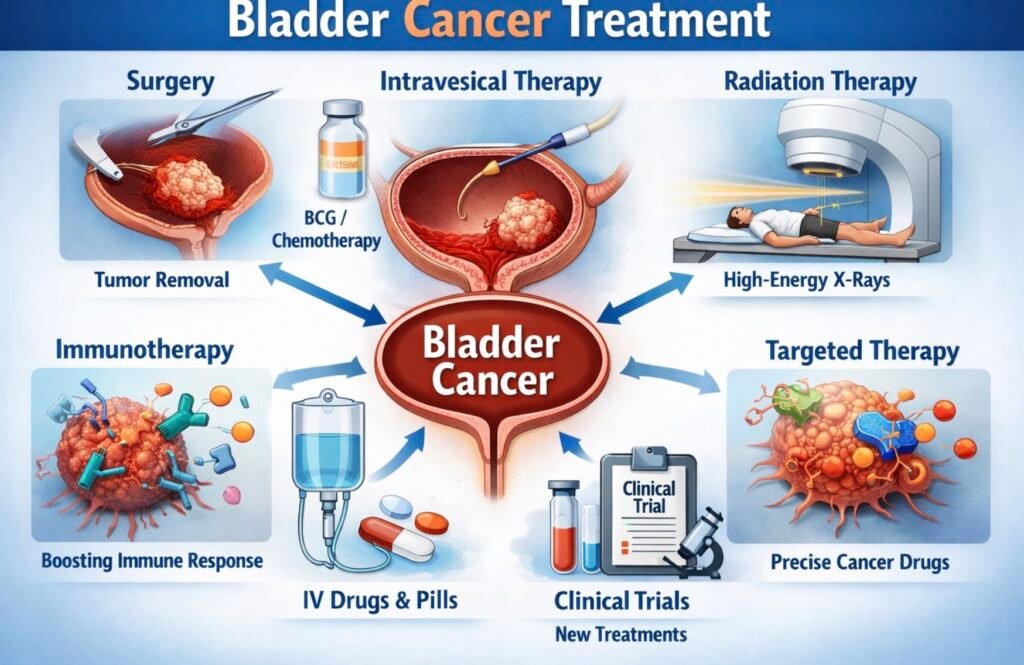
Specialized diagnosis and bladder cancer treatment using endoscopic surgery, laser techniques, intravesical therapy, and reconstructive surgery.
What Is Bladder Cancer?
Bladder cancer develops from the inner lining of the urinary bladder. It commonly presents as painless blood in urine and is strongly linked to smoking and chemical exposure.
Symptoms of Bladder Cancer
Blood in urine
Painful urination
Urinary urgency
Lower abdominal pain
Frequent urination
Unexplained weight loss
Diagnosis of Bladder Cancer
Urine routine examination
Urine cytology
Ultrasound and CT scan
Cystoscopy
Bladder biopsy (TURBT)
MRI or PET if required
Bladder Cancer Treatment Options
Endoscopic & Laser Surgery
TURBT
Laser ablation
Intravesical Therapy
BCG therapy
Chemotherapy
Major Surgery
Radical cystectomy
Urinary diversion procedures
Advantages of Modern Bladder Cancer Treatment
Early tumors treated without big cuts
High bladder preservation rates
Accurate staging
Lower recurrence with regular follow-up
Recovery After Bladder Cancer Treatment
Catheter care
Gradual diet and activity
Lifelong surveillance
Lifestyle modification
Bladder CANCER Treatment FAQs
Is blood in urine always cancer?
No. Blood in the urine (hematuria) does not always mean cancer. Urinary tract infections, kidney or ureteric stones, prostate problems, trauma, and other conditions can also cause blood in the urine. However, unexplained blood in the urine—especially visible blood—should not be ignored because it can sometimes be an early sign of bladder or urinary tract cancer. A urological evaluation is recommended to determine the cause.
Does bladder cancer recur?
Yes. Bladder cancer can recur after treatment, particularly non-muscle-invasive bladder cancer. The risk of recurrence depends on factors such as tumour size, number, grade, stage, and previous recurrences. Regular follow-up, including cystoscopy when recommended, is important for detecting recurrent disease early and starting treatment promptly.
What are the early symptoms of bladder cancer?
The most common early symptom of bladder cancer is blood in the urine (hematuria), which may be visible or detected only on urine testing. Other symptoms can include frequent urination, burning while passing urine, urgency, or pelvic discomfort. These symptoms can also occur with urinary infections and other conditions, so persistent or unexplained symptoms should be evaluated by a urologist.
How is bladder cancer diagnosed?
Bladder cancer is usually evaluated with a combination of urine tests, imaging and cystoscopy. Cystoscopy allows the urologist to directly examine the inside of the bladder. If a suspicious growth is found, transurethral resection of bladder tumour (TURBT) is generally performed to remove the tumour and obtain tissue for histopathological examination. The biopsy helps determine the tumour’s type, grade and depth of invasion.
What is the treatment for bladder cancer?
Treatment depends mainly on the stage and grade of the bladder cancer. Non-muscle-invasive bladder cancer is commonly treated with TURBT, with intravesical treatments such as BCG used in appropriate patients. Muscle-invasive disease may require radical cystectomy, chemotherapy, immunotherapy, radiotherapy, or a combination of treatments. The treatment plan is individualized according to the patient’s disease characteristics and overall health.
Can bladder cancer be cured?
Yes. Many bladder cancers, particularly when detected at an early stage, can be successfully treated. The likelihood of cure depends on the cancer’s stage, grade, type and response to treatment. Early diagnosis and appropriate treatment are important. Even after successful treatment, regular follow-up is often required because some bladder cancers can recur.
When is bladder removal required for bladder cancer?
Bladder removal, known as radical cystectomy, may be recommended for selected patients with muscle-invasive bladder cancer, very high-risk non-muscle-invasive cancer, recurrent disease, or cancer that does not respond adequately to bladder-preserving treatments. The decision depends on the tumour’s stage, grade, location, recurrence pattern and other patient-specific factors. In suitable patients, bladder-preserving approaches may be considered.
Why Choose Dr. Vikas Gupta
Expert-led, ethical and advanced urology care in Gurugram & Delhi NCR
Urologist | Andrologist | Uro-Oncologist
Trusted Expertise
MCh Urology from PGIMER Chandigarh with advanced training in endourology and uro-oncology.
Advanced Laser Surgery
Minimally invasive laser procedures for stones, prostate and urinary disorders.
Comprehensive Urology Care
Expert evaluation and treatment of urinary, prostate, kidney, male health and urological conditions.
Patient-Centric Approach
Compassionate consultation, transparent advice and ethical treatment.
Book Appointment For Bladder Cancer Consultation
Timely treatment saves bladder and life. Book appointment with Dr Vikas Gupta for bladder cancer care in Gurugram and Delhi NCR.
Providing trusted urology care in Gurugram and Delhi NCR